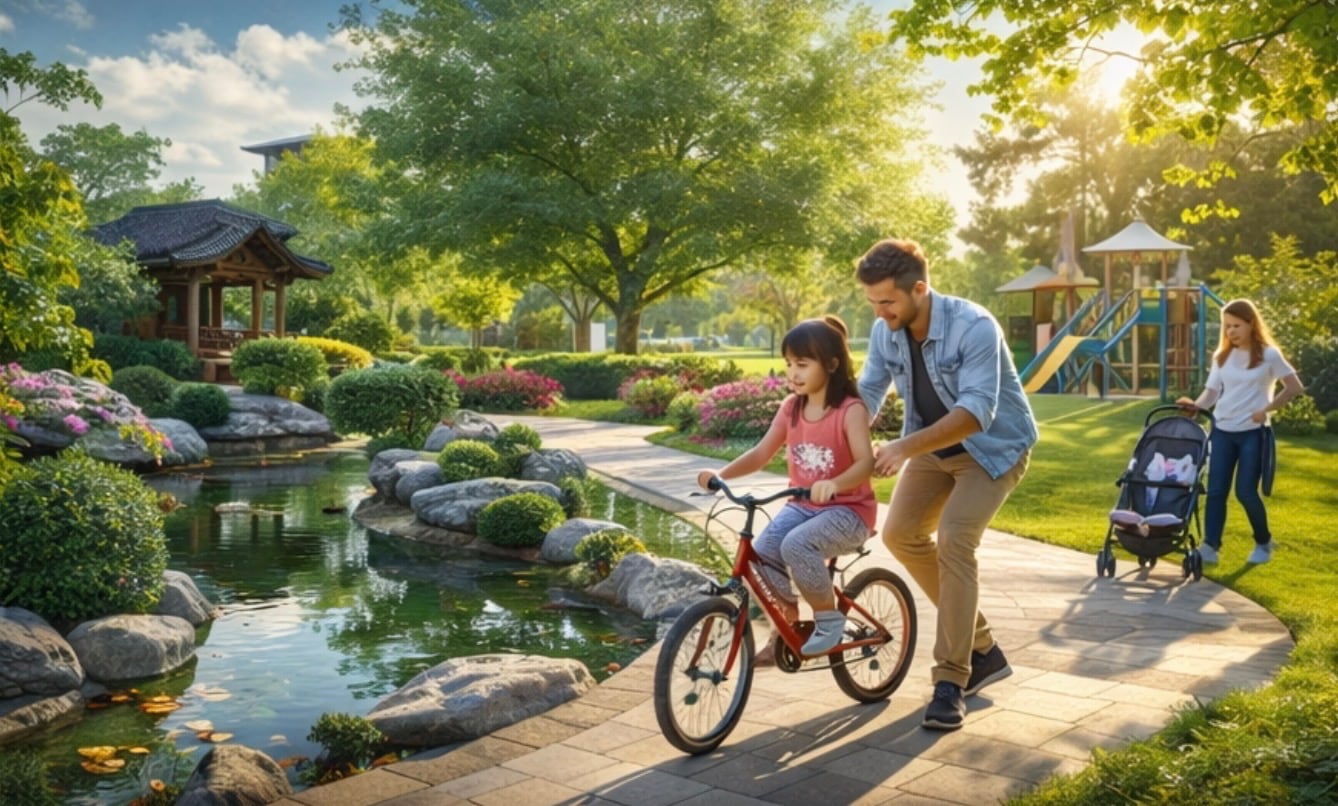
For more than two decades, researchers have studied parts of the world where people live the longest and healthiest lives. These regions, known as “Blue Zones,” share common traits: strong community ties, daily physical movement, access to nature, and environments designed to support wellbeing.
Now, that philosophy is influencing how communities are being built in Dubai.
What Are Blue Zones?
The term was first introduced by writer and National Geographic Fellow Dan Buettner after an expedition in 2000 to investigate longevity in Okinawa, Japan.
Further research identified four additional regions where people not only lived longer but maintained a high quality of life into old age:
- Sardinia
- Nicoya Peninsula
- Icaria
- Loma Linda
Across these communities, nature plays a fundamental role. Healthy behaviour is embedded into everyday routines through walkable environments, social interaction, outdoor activity, and balanced lifestyles.
This research has since evolved into a global movement focused on designing healthier communities.
Dubai’s Green Vision for the Future
Dubai is increasingly placing nature and human wellbeing at the centre of urban planning.
Launched at the World Governments Summit, the city’s Blue and Green Spaces Roadmap outlines projects worth more than AED 4 billion aimed at strengthening sustainable infrastructure.
Over the next five years, Dubai plans to:
- Plant 1.5 million trees
- Create 120 new parks across nearly 3 million square metres
- Develop more than 200 sports and recreational spaces integrated into green networks across the city
This initiative reflects a broader ambition to position Dubai as a leading global sustainable city where nature enhances quality of life.
A New Model of Bio Living
Inspired by the Blue Zones concept, a major wellness focused development is taking shape at Mohammed Bin Rashid City District 7.
Keturah Reserve is a AED 5.7 billion bio living community designed around the idea that air, water, and light are foundational to human health.
The development integrates advanced air purification systems that remove dust, chemical compounds, and pathogens beyond what conventional buildings address. Water systems are engineered with similar precision to support healthier living conditions.
Lighting design mirrors natural daylight cycles, helping regulate sleep and wake rhythms. Landscaping is equally intentional, featuring mature trees, olive trees, green corridors, and Japanese inspired dry gardens that create calm, restorative public spaces.
Designing for Families and Community
The concept extends beyond environmental engineering. Community design encourages active lifestyles and social interaction.
Plans include:
- Safe outdoor play areas
- Educational programming spaces
- A creche and daycare centre
- Summer camps and Montessori classes
- A bio living farm that promotes outdoor learning
The aim is to embed healthy behaviour into daily life rather than treat wellness as an optional luxury.
The Commercial Case for Wellness
Wellness focused real estate is not just a lifestyle trend. It is increasingly a financial differentiator.
According to project leadership, properties with strong wellness credentials in Dubai are commanding price premiums of up to 15 percent. Branded residences with lifestyle positioning can secure premiums between 15 and 25 percent.
Developments that integrate green infrastructure, walkable streets, and community focused amenities are expected to outperform the wider market as health and longevity become primary purchasing criteria for luxury buyers.
From Concept to Citywide Movement
What began as scientific research into longevity has evolved into a blueprint for urban development.
Dubai’s large scale commitment to green infrastructure combined with private sector innovation signals a shift in how cities define value. The focus is no longer solely on iconic architecture or density. It is increasingly about how environments shape physical and mental wellbeing.
As sustainability and longevity move from aspiration to expectation, Dubai’s embrace of the Blue Zones philosophy may help define the next chapter of luxury community design across the Gulf and beyond.