Dubai has taken a bold step toward a cleaner future with a plan to shut down all landfill sites by the end of 2027. The move puts the emirate on track to become one of the first in the region to eliminate traditional dumping grounds entirely.
Dubai Municipality confirmed that five landfill sites have already been closed, with the last two—Al Qusais and Bayada—currently being phased out. This shift is part of a larger strategy that combines recycling with advanced waste-to-energy systems to handle the city’s growing waste needs.
The Centre Powering the Change
A major driver of this transition is the Dubai Waste-to-Energy Centre, one of the largest facilities of its kind in the world. It processes around 6,000 tonnes of municipal solid waste every day, which is roughly half of Dubai’s total daily waste output.
Through a steam-powered system, the centre converts waste into 200 megawatt-hours of electricity daily. That’s enough to power around 350,000 homes, thanks to its integration with the Dubai Electricity and Water Authority. Adel Al Marzouqi, CEO of the Waste and Sewerage Agency, described the centre as a global benchmark in scale, automation, and environmental performance.
Repurposing What’s Left Behind
Dubai’s plan goes beyond closing landfills and generating clean power. The city is also focused on transforming incineration byproducts into something useful.
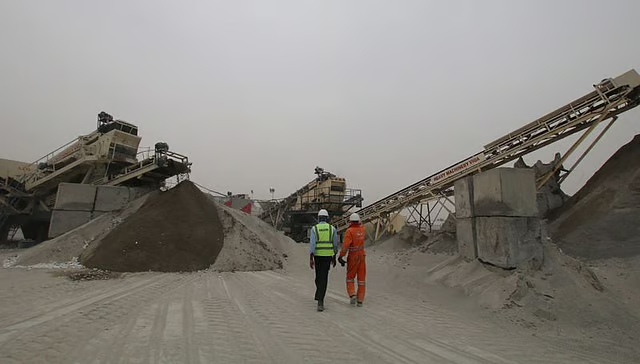
The bottom ash left after burning waste is already being reused in temporary road construction through partnerships with DP World and the Roads and Transport Authority. Future uses are being studied, including eco-friendly interlock manufacturing, which could save government entities millions by reducing the need for newly sourced materials.
A Fully Circular Waste System
What makes Dubai’s model stand out is its circular approach. Waste collected from homes is processed, converted into electricity, and sent back to power the same homes. This creates a smart, efficient, and sustainable loop that reduces environmental impact while supporting the city’s growing energy needs.
The complete closure of all landfill sites by 2027, combined with advanced recycling and waste-to-energy plants, signals Dubai’s commitment to a cleaner, greener future. It’s a transformation that not only addresses a global challenge but also sets a new regional standard in modern waste management and clean energy production.