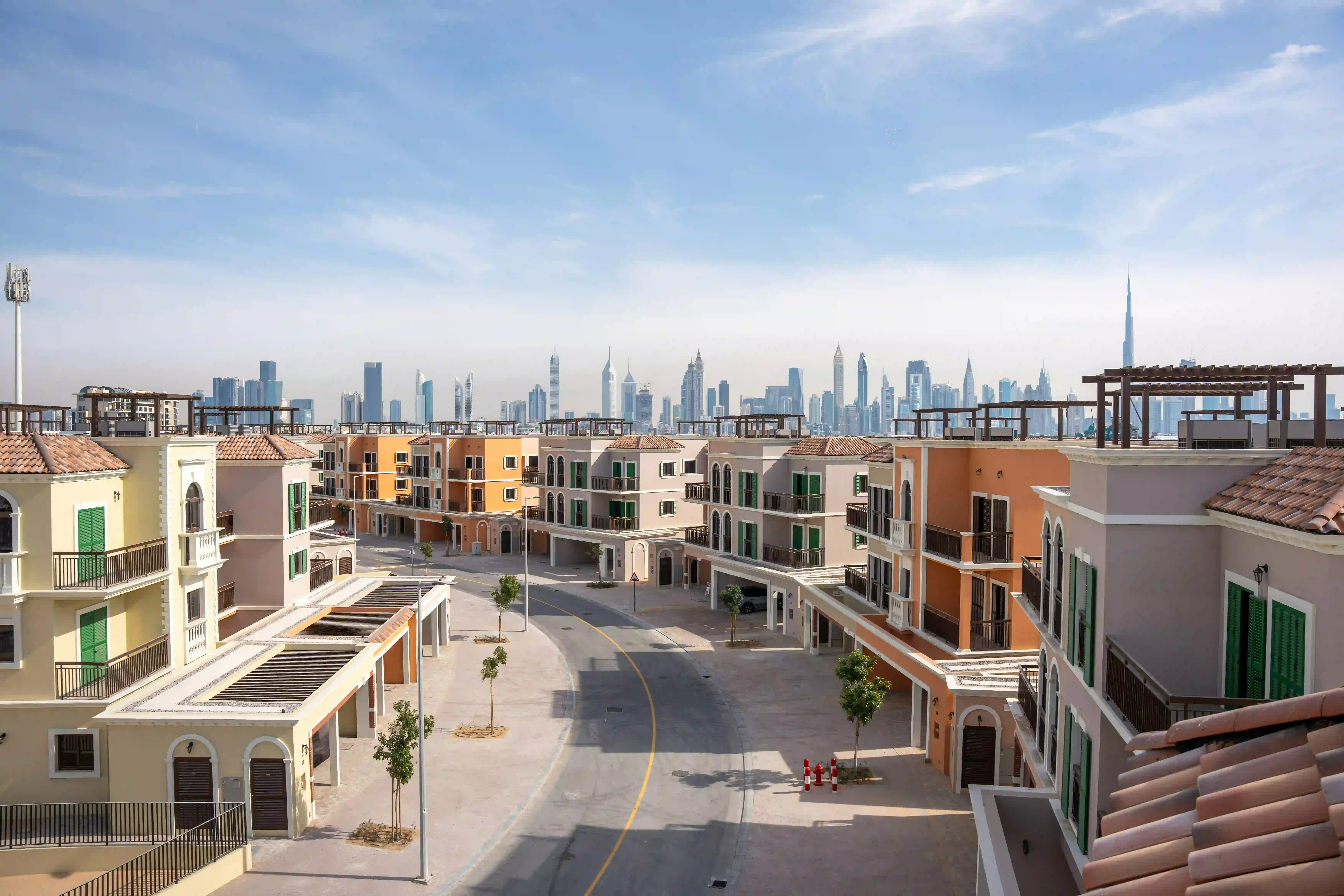
The residential property market in Dubai has entered a distinct phase of supply and demand divergence in Q3 2025. According to recent market reports, a surge in apartment supply contrasts sharply with limited villa inventory - a pattern that is reshaping the pricing and investment dynamics across the city.
Apartment Supply Comes to the Fore
Developers launched over 10,000 new residential units in Q3, of which apartments accounted for about 97 % of new launches. Handovers were also heavy: in the first nine months of 2025, Dubai saw around 30,000 new units delivered, matching the full-year volume of 2024 — and Q4 is expected to add roughly another 10,000.
Much of this supply is concentrated in mid-density, high-accessibility communities, where apartments offer a compelling proposition for both end-users and investors. The portfolio of upcoming completions remains strong, signalling that apartment-led growth will remain central in the near term.
Villa Segment: Scarcity Driving Value
By contrast, villa and townhouse launches were limited during Q3. This limited supply is creating a scarcity effect that is supporting strong demand and upward pricing in the low-density/residential-community segment.
Indeed, while apartment transactions climbed, villa‐and‐townhouse sales value and volume both saw adjustments in Q3 — partly reflecting fewer new launches and a more selective buyer approach.
Pricing & Market Impact
- The apartment sector recorded substantial transaction volumes: Q3 saw 48,646 apartment units transacted, representing a 22 % year-on-year increase.
- Villas and townhouses, though fewer in volume, saw price rises across many communities, with average increases of around 22 % for tracked villa/townhouse communities.
- The average price per square foot in some areas reached historic highs, supporting the notion that scarcity (especially in villas) remains a key driver.
What This Means for Buyers, Investors and Marketers
- If you’re investing or developing, the surge in apartment supply means there will be stronger availability — but also potentially stiffer competition and more differentiation needed (location, amenities, connectivity).
- For the villa/townhouse segment, scarcity is creating an advantage. Pricing strength and value retention are higher prospects for well-located family homes.
- For marketers and content strategists (such as your home-appliance or lifestyle brand work), this means that messaging around “residential upgrade” or “moving into a villa lifestyle” can resonate strongly. The growing value in villas may translate into homeowners willing to spend more on home-appliances, interior upgrades and premium living.
- For urban planners, brokers and service providers: understanding which communities are absorbing new supply (for apartments) and which are facing supply constraints (for villas) allows you to tailor offerings more precisely — e.g., rentals, resale, renovation services, home-products.
Outlook
Looking ahead, with a strong pipeline of apartment completions yet to come, and restrictive villa supply, the diverging dynamics are likely to continue. The broader market appears to be shifting from explosive growth toward a more balanced, structural growth phase — still strong, but more selective and differentiated.
For anyone involved in Dubai’s residential space — whether from an investment, service-provider or marketing angle — these trends highlight where the opportunity lies and where value can be maintained.