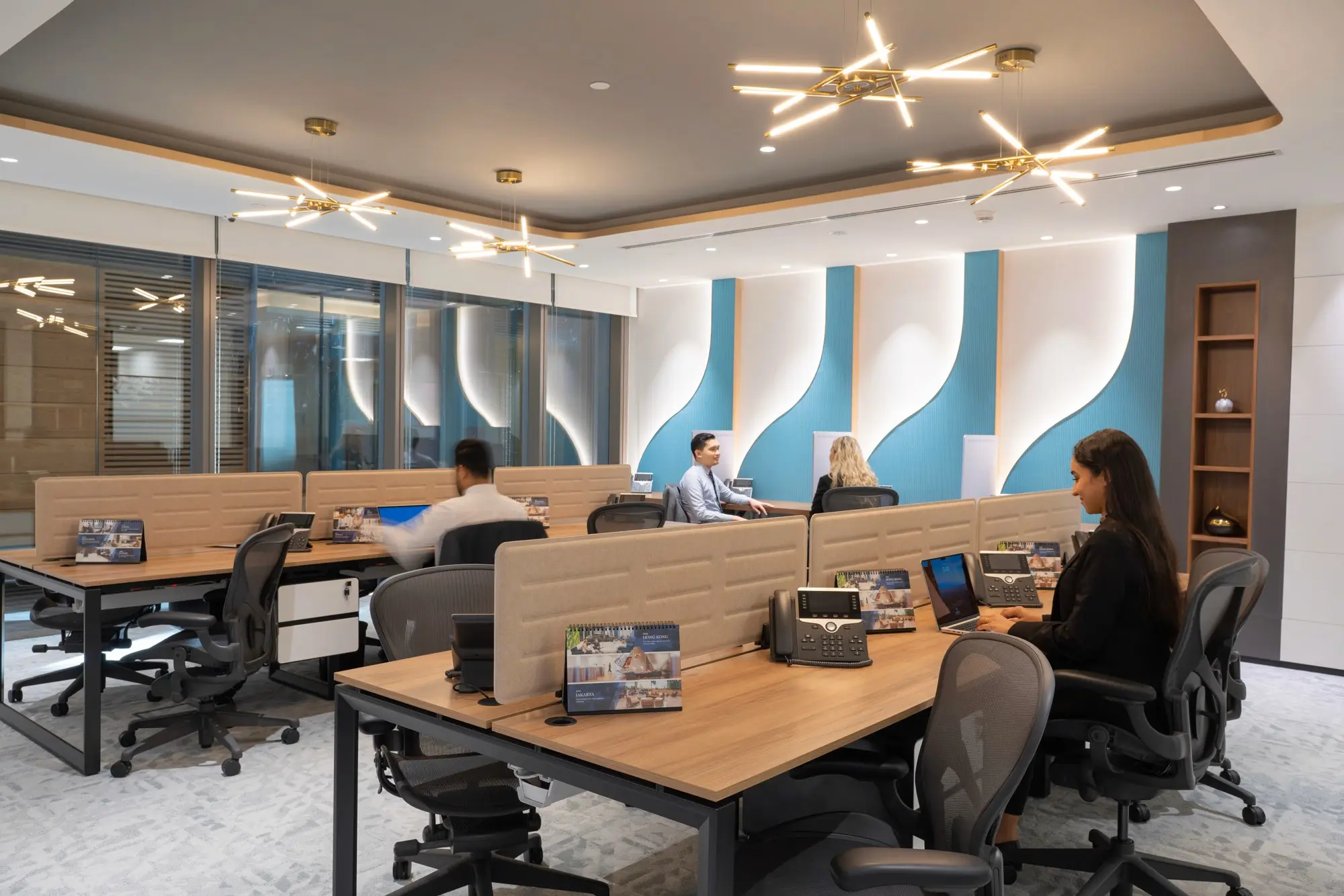
Dubai’s commercial real estate market is heading toward a structural reset that will reshape office demand, pricing and performance over the next few years. Industry experts say a clear two-tier system is likely to emerge by 2028, separating modern Grade A office buildings from older stock that has struggled to keep pace with evolving corporate expectations.
While commercial property activity has surged in 2025, the sector is now confronting a long-delayed transformation that the residential market underwent more than a decade ago.
Strong growth masks structural gaps
Dubai’s commercial real estate sector has posted impressive headline numbers this year. Sales value rose 77.9 percent in the first 11 months, while transaction volumes increased 35.1 percent year on year. Total commercial sales reached Dh15.5 billion, up from Dh8.7 billion last year, with deals rising from 3,970 to 5,364.
Despite this growth, the sector has lagged behind residential real estate in terms of design evolution, construction quality and luxury standards.
For more than 15 years, office buildings have largely remained static while residential developments underwent major upgrades in architecture, amenities and building codes.
A delayed reset is finally approaching
Industry leaders point to a lack of true next-generation office supply since 2008. While residential projects embraced new design language and higher construction benchmarks, commercial real estate did not experience a similar reset.
That is now changing. The first wave of next-generation Grade A office buildings is expected to begin handing over from 2028 onward, marking a turning point for the sector.
This new supply will introduce modern layouts, energy efficiency, architectural relevance and workplace design aligned with how global corporates now operate.
Two-tier office market expected by 2028
As new Grade A offices enter the market, the gap between older and newer buildings is expected to widen sharply. Tenants will have access to modern, efficient and brand-aligned office environments, putting pressure on secondary buildings that fail to meet current standards.
This shift is likely to trigger a repricing of the entire commercial sector, where quality becomes the defining factor. New Grade A properties are expected to command premium rents and stronger occupancy, while older buildings may face declining demand unless they undergo significant upgrades.
The result will be a clear two-tier office market, driven by performance rather than location alone.
Grade A demand already visible
Existing examples of true Grade A offices are already outperforming the wider market. Buildings such as Vision Tower in Business Bay demonstrate the depth of demand from established corporates seeking high-quality office environments.
Such buildings attract serious tenants, often with larger unit sizes that naturally filter for well-capitalised companies. Their consistent performance highlights how strong demand is when quality, design and functionality align.
What this means for investors and landlords
For investors, the coming reset presents both opportunity and risk. Assets aligned with future Grade A standards are likely to see sustained demand, stronger rental growth and long-term value appreciation.
Conversely, older office stock may face mounting pressure. Without reinvestment, repositioning or redevelopment, secondary buildings risk falling behind as tenants migrate toward newer, more efficient spaces.
Landlords holding older assets may need to reassess strategies, whether through refurbishment, pricing adjustments or alternative uses.
A defining moment ahead
Dubai’s commercial real estate market is entering a defining phase. Strong transaction activity today does not eliminate the need for structural evolution tomorrow.
As new Grade A offices begin to enter the market from 2028, performance will increasingly be driven by quality, efficiency and relevance. The long-awaited reset is underway, and it will reshape how office space in Dubai is valued, leased and invested in for the next decade.