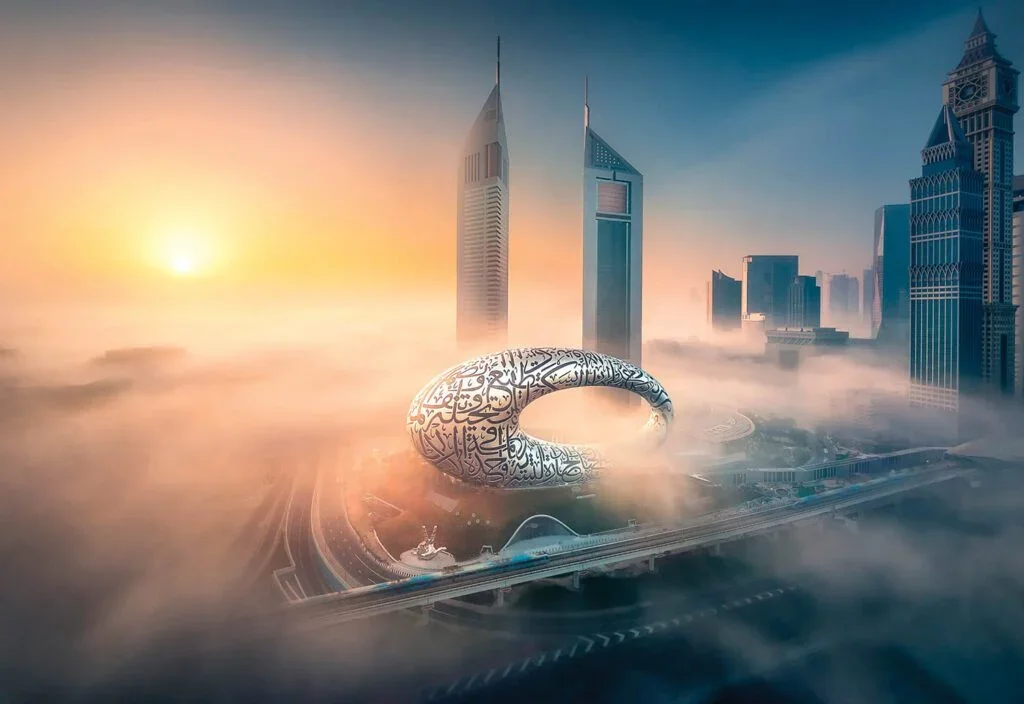
Dubai continues to push the boundaries of urban planning, and the Future Loop project is one of its most ambitious steps yet. Designed to reshape how people move through the city, the project places walking, connectivity and quality of life at the centre of urban mobility.
More than just an elevated pathway, the Future Loop reflects Dubai’s broader vision of becoming a smart, people-first city where daily movement is seamless, sustainable and comfortable year-round.
A City Designed for Walking
Launched on December 7, 2024, by His Highness Sheikh Mohammed bin Rashid Al Maktoum, the Dubai Walk Master Plan aims to transform Dubai into a fully pedestrian-friendly city. The plan outlines a 6,500-kilometre network of walkways spanning 160 areas across the emirate.
By 2040, Dubai plans to construct 3,300 kilometres of new walkways and rehabilitate 2,300 kilometres of existing ones, with an additional 900 kilometres planned beyond that timeline. The strategy also includes building 110 pedestrian bridges and underpasses, with the goal of increasing walking and soft mobility from 13 per cent to 25 per cent.
The Future Loop plays a central role in bringing this vision to life.
What Is the Future Loop?
Located around the Museum of the Future, the Future Loop is a 2-kilometre elevated, climate-controlled walkway designed to support year-round pedestrian movement. The project will feature a 30,000-square-metre air-conditioned walking level, alongside an equal amount of open space that includes shaded areas and greenery to help reduce heat.
Its design balances function and aesthetics. The iconic bridge structure blends into its surroundings while connecting some of Dubai’s most important commercial and cultural destinations.
Connecting Dubai’s Key Landmarks
The Future Loop will link 10 major locations, including the Museum of the Future, Dubai World Trade Centre, Emirates Towers, Dubai International Financial Centre and nearby metro stations. With widths ranging from 6 to 15 metres, the pathway is designed to handle high foot traffic while remaining comfortable and accessible.
Crucially, the project integrates directly with Dubai’s wider transport network, connecting pedestrians to metro stations, cycling tracks, tram lines and future mobility systems. This seamless integration makes walking a practical alternative to short car journeys in high-density areas.
Supporting Dubai’s 20-Minute City Vision
The Future Loop supports Dubai’s 20-Minute City goal, which aims to ensure that 80 per cent of residents can access essential services within a 20-minute commute. By encouraging walking and reducing reliance on cars, the project helps ease traffic congestion while improving overall urban efficiency.
It also aligns with the Quality of Life Strategy 2033, which focuses on safer pedestrian routes, better connectivity between neighbourhoods and the inclusion of cultural and creative elements that reflect the identity of each area.
What It Means for Residents
For residents and visitors, the Future Loop offers a more comfortable and accessible way to move around the city. It enables people to walk or cycle between key destinations, connect easily to public transport and reduce dependence on cars in busy districts.
Beyond convenience, the project reinforces Dubai’s commitment to sustainability, liveability and long-term urban resilience.
Looking Ahead
While the Dubai Walk Master Plan extends through 2040 and beyond, the Future Loop is already progressing as part of the emirate’s major infrastructure initiatives. His Highness Sheikh Hamdan bin Mohammed bin Rashid Al Maktoum recently reviewed its development as part of broader efforts to enhance Dubai’s transport and road networks.
As Dubai continues to evolve, the Future Loop stands as a clear signal of how the city plans to move forward—on foot, by design, and with people at the heart of its urban future.